
Innovations and Insights from the Sustainability LIVE Net Zero Summit
The MSQ/Sustain team attended the Sustainability Live Net Zero Summit last week, joining sustainability leaders, innovators, and organisations from a wide range of industries to explore how businesses are responding to the climate crisis. The two day event focused on the critical intersection between sustainability and supply chains, bringing together perspectives from across the value chain.
With over 50 expert speakers from procurement, supply chains, and sustainability roles, the discussions covered everything from low-carbon logistics and circular economies, to the role of culture in accelerating climate action.
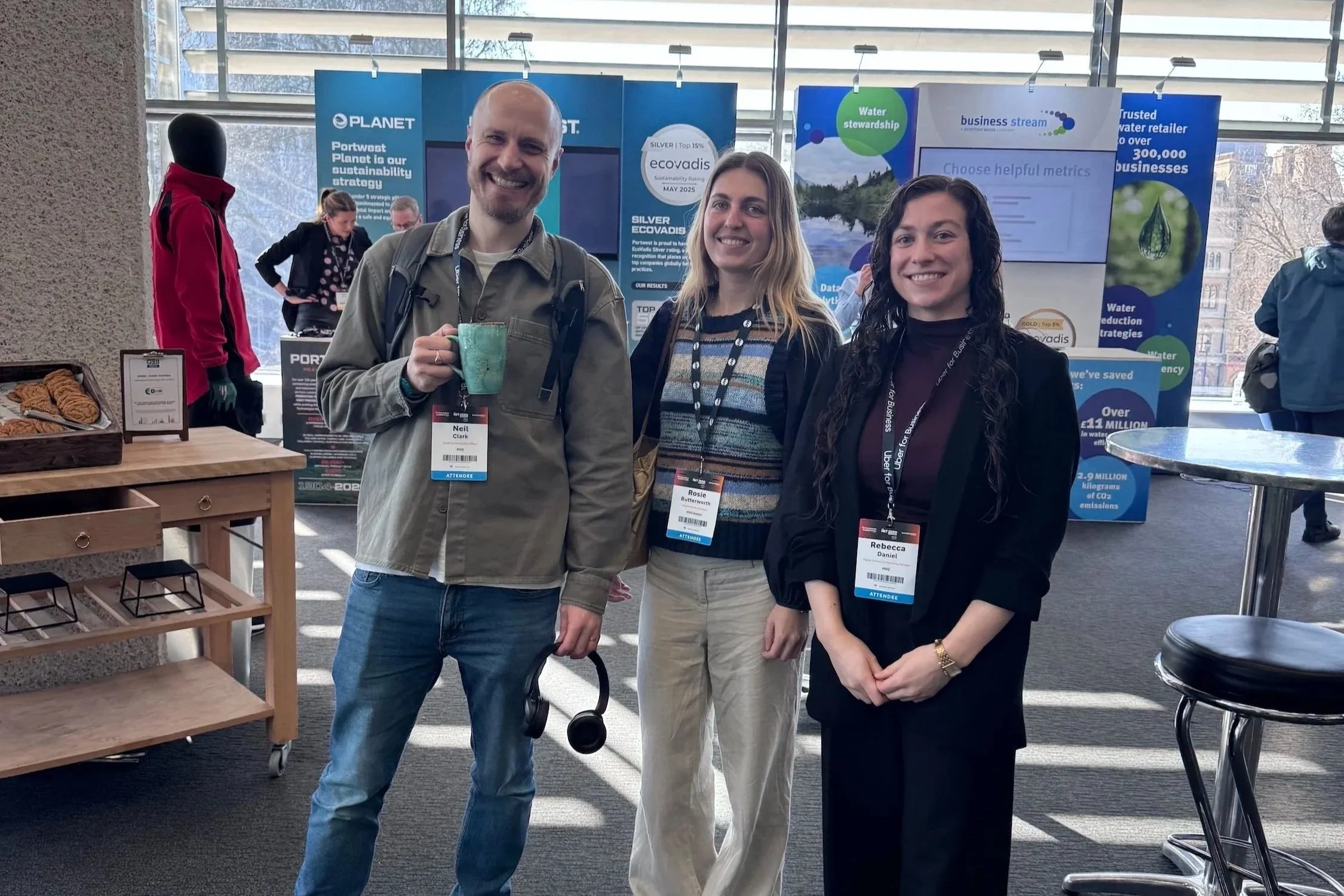
Neil Clark, Rosie Butterworth, and Rebecca Daniel from MSQ/Sustain at the Sustainability LIVE Net Zero Summit.
Here are some of our favourite sustainable innovations and standout moments from the event:
BUILDING SUSTAINABLE SUPPLY CHAINS: DP WORLD
DP World outlined five key strategies the company is using to build more sustainable and resilient supply chains, demonstrating how large-scale logistics companies are investing in sustainability action:
Reducing Operational Emissions: At DP World’s London Gateway port in Essex, operational emissions have already been reduced by 47%.
Modal Shift Programme: DP World is incentivising cargo to travel by rail rather than road, which can reduce CO2 emissions by 25%. And 29% of containers are now transported by rail, removing 13 million truck miles from road transport.
Carbon Inset Programme: Importers receive 250kg of CO2 equivalent inset credit for each import-laden container. Over 250,000 import containers are registered with the programme, helping the company tackle its Scope 3 emissions within the supply chain.
Low-Carbon Truck Programme: Truck operators that visit a DP World port more than 70 times per quarter receive up to 5000 litres of Hydrotreated Vegetable Oil (HVO) at the price of diesel, as well as carbon literacy training. Whilst the long-term goal is to transition to electric vehicles, HVO is currently acting as an important transition fuel.
Energy Transition Contribution: These sustainability initiatives are funded through a £29.50 charge per import-laden container, showing how environmental investments can be integrated into business models.
RETHINKING PACKAGING: LUSH
Packaging innovation featured across several talks during the summit, with LUSH sharing insights into how the brand is redesigning its packaging materials.
Currently, 66% of Lush’s packaging is paper based, and the company works with small innovative mills to develop new materials. However, rather than relying on one single solution, the brand aims to use a variety of materials so that environmental impacts are spread across ecosystems rather than concentrating in one supply chain. Some of the materials they are exploring include waste-based polymers, banana fibres, and cotton waste fibres – what they like to call ‘future fibres’.
LUSH also runs a ‘Bring It Back’ recycling scheme where customers receive 50p when they return plastic packaging to a store. This is recycled directly at LUSH’s facility and used to make new packaging for their products, helping to reduce waste and encourage circular behaviour. And crucially, the scheme drives high customer loyalty for the brand (with a 33% increase in spending).
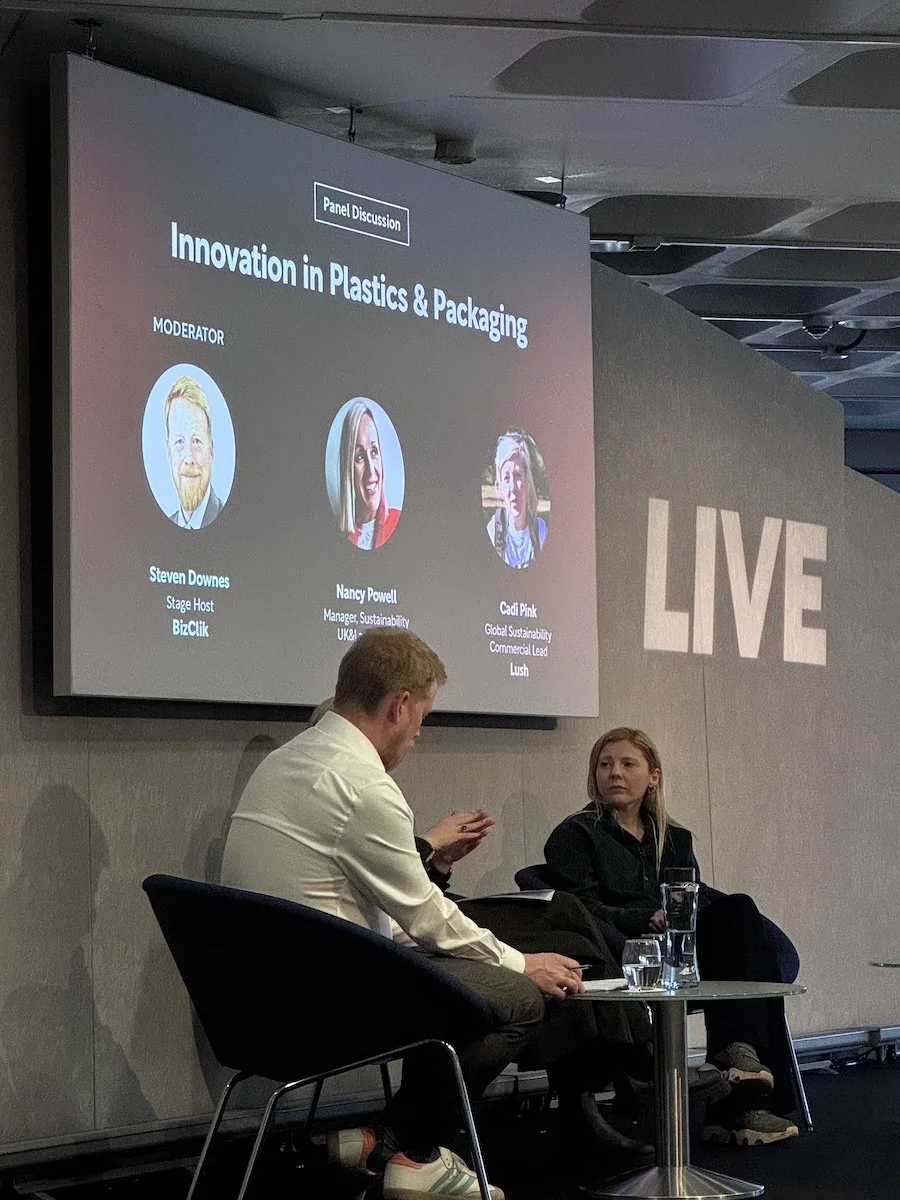
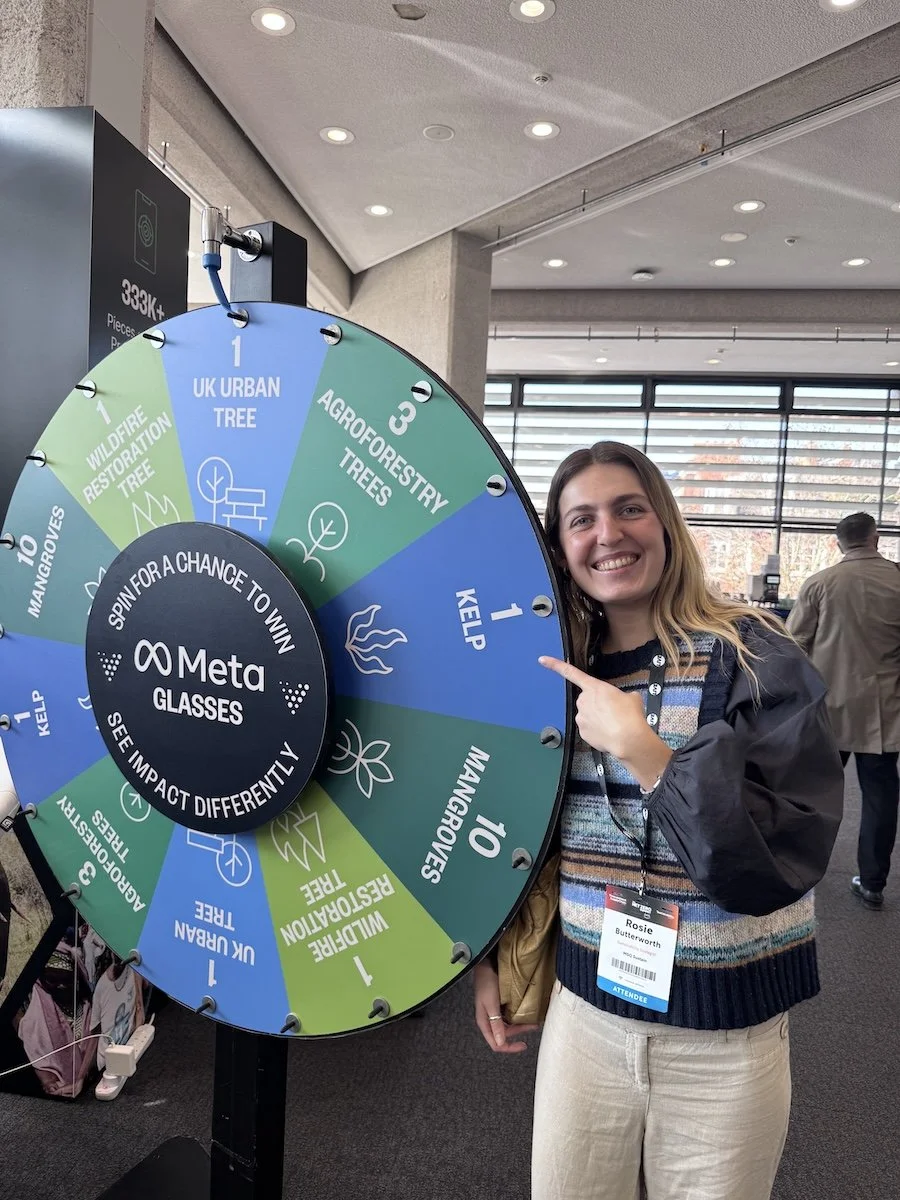
1) Innovation in Plastics & Packaging Panel Discussion with Steven Downes (BizClik), Nancy Powell (HP) and Cadi Pink (LUSH). 2) Rosie Butterworth spinning the Veritree wheel.
TURNING TREE PLANTING INTO MEASURABLE IMPACT: VERITREE
A memorable moment from the event came from Veritree, a platform focused on bringing transparency to global restoration projects. The company works with businesses who want to invest in reforestation initiatives, but what makes it unique is its focus on verification and accountability. Veritree tracks the entire process – growing, monitoring, measuring, and reporting – with 3 years of survivability monitoring and ensuring 40 years or more of land rights to ensure longevity, enabling organisations to see the real-world impact of their investments.
At the summit, we had the chance to take part in an interactive activity run by Veritree. Attendees could spin a wheel to contribute to tree planting restoration projects. Our spins resulted in 10 mangroves and 1 UK urban tree planted.
SPORT AS A PLATFORM FOR CHANGE: ARSENAL FC
Leveraging sport and culture was another key theme throughout the summit, with sessions from E1 and Formula E. One of the most inspiring talks came from Arsenal FC, delivered by youth academy player Alexei Rojas.
Arsenal FC is actively embedding sustainability across the entire club, not just in its operations, but also in culture and education. The club sends youth players on sustainability focused trips where they plant trees, meet people working in conservation, and learn about why sustainability efforts are important for both people and wildlife.
The club’s training facilities are treated as living ecosystems, with spaces used to plant trees, bushes, and wildflowers to attract birds, insects, and other wildlife. The stadium is also powered by a battery system charged with renewable energy, helping to reduce match-day emissions. Other initiatives include donating leftover match-day food to food banks and redistributing old kit and boots to people around the world through Charity Boots.
Football has one of the largest fanbases in the world, and Arsenal FC recognises that its biggest sustainability tool is its power to influence millions of people.
SUSTAINABILITY THROUGH PRODUCT INNOVATION: PROCTER & GAMBLE
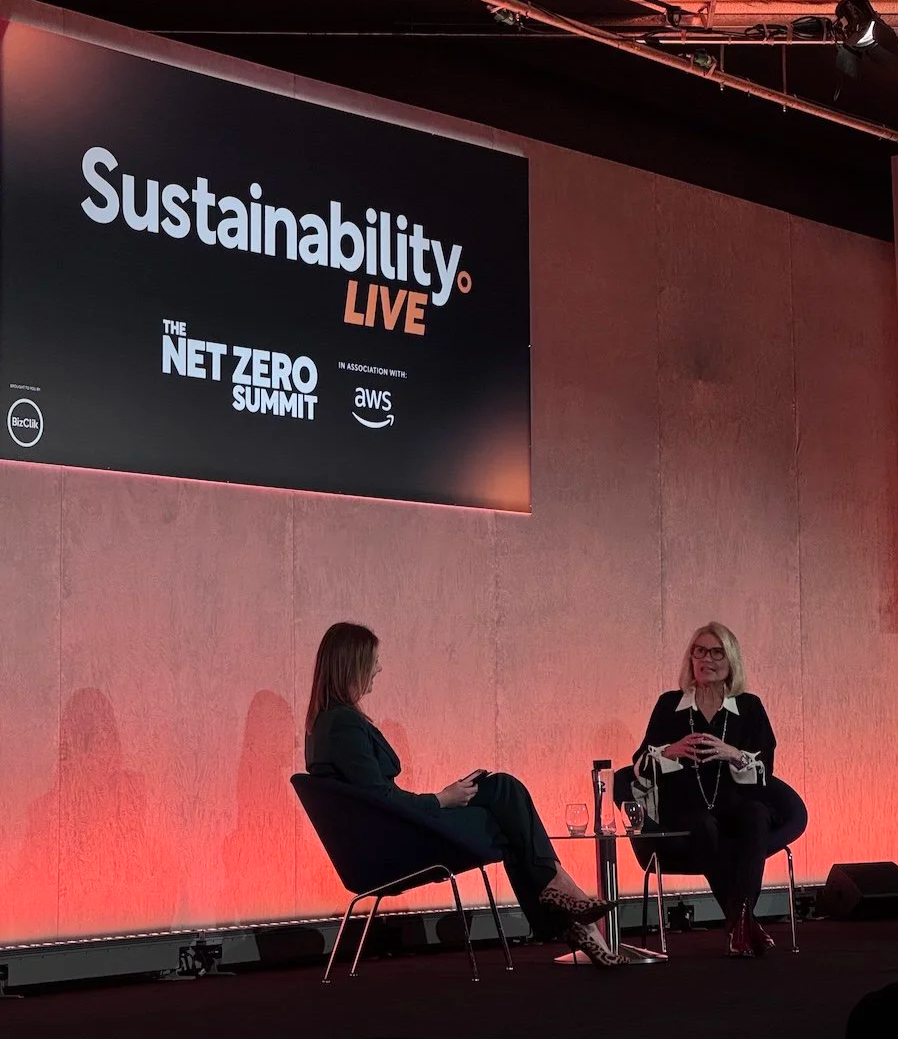
The Next Gen CSO fireside with Virginie Helias (Procter & Gamble).
Rather than treating sustainability as a separate department, Proctor and Gamble has embedded it across every part of the organisation. Some examples where sustainability has been a driver of product innovation, highlighted at the summit, include:
Tide evo – a laundry pod designed using 100% compressed soap, with no packaging (except the cardboard box). Its cleaning power, convenience, and impact on electricity bills (from washing cold) are the lead selling points. Its sustainability creds are an added bonus.
Head & Shoulders – shampoo bottle composed of 25% of recycled beach-bound plastic.
Oral-B toothbrush – with a better battery that lasts longer (up to 4 weeks), reducing energy consumption from charging.
A key part of their sustainability approach is to lead with performance ‘irresistible superiority’, and let sustainability drive desirability – ultimately creating solutions that work for people and planet.
KEY TAKEAWAYS FROM THE SUMMIT
Sustainability innovation is happening everywhere. From logistics companies to sports teams, organisations in every sector are implementing solutions which are reducing their environmental impact.
Language matters. Speakers emphasised that the word sustainability can sometimes be too abstract or off-putting. Breaking the concept into clear and relatable ideas can help bring both consumers and colleagues on board.
Collaboration is essential. Many industries are still working in siloes, but addressing the climate crisis requires system level change. This means greater cross-sector collaboration, knowledge sharing, and partnerships.