The Ocean Frontier
The ocean is out of sight and out of mind… you’ve probably heard that before.
And that might be true for many, but the ocean is a highly contested geopolitical, ecological, and economic space. It is governed, monitored, commodified, and industrialised - just like resource-rich regions on land.
And we feel the time for the ocean is now - and that’s why we launched MSQ/Ocean. A specialist offering using the power of creative thinking and ambitious ideas to accelerate change for a healthier ocean.
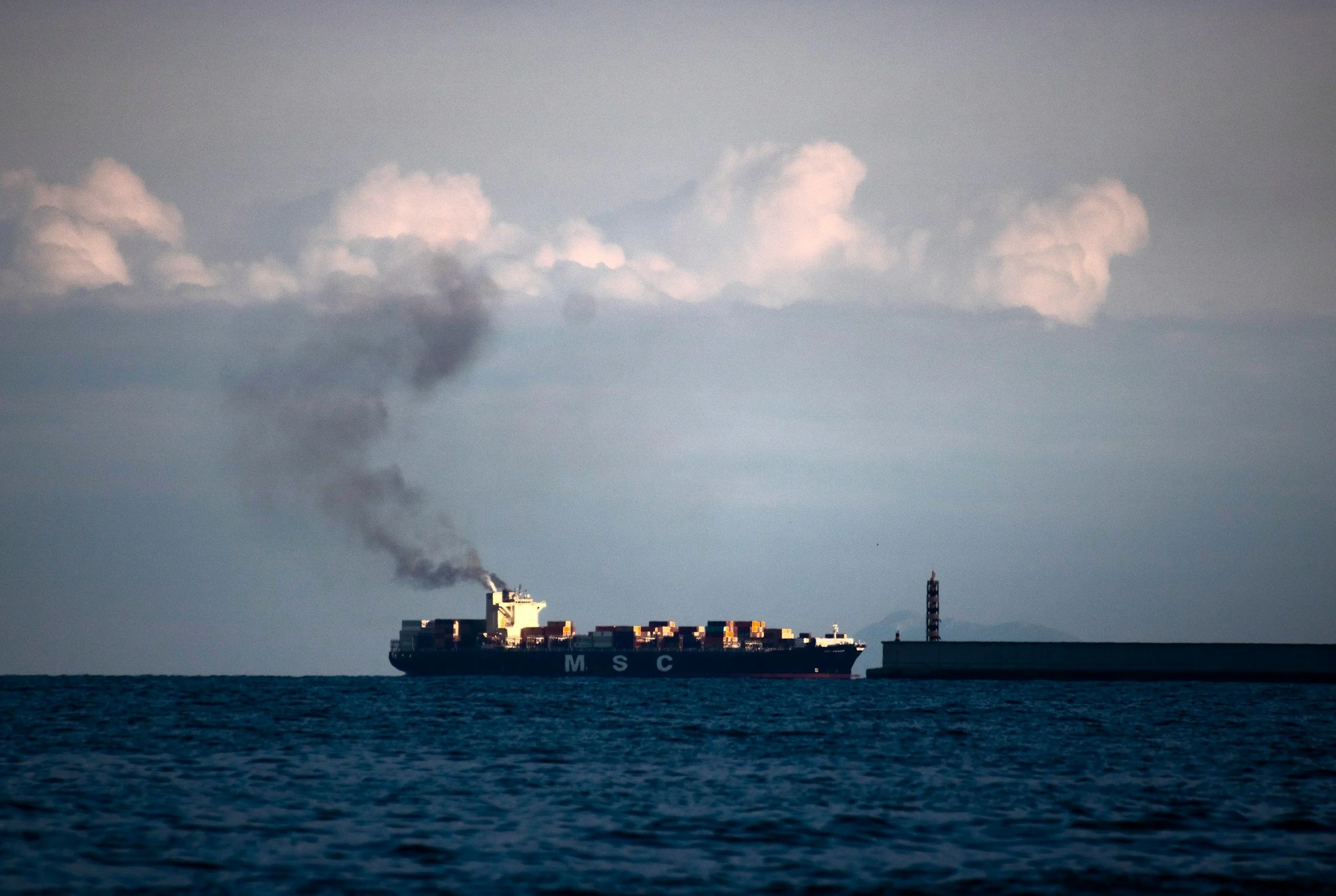
The ocean is a highly contested geopolitical, ecological, economic, and digital space. Credit: Ellina Turovskaia / Unsplash.
The ocean is a key buffer to climate change, species collapse, and human survival. AND it is centre stage for human competition and geopolitical tension.
The ocean is critical on an ecological level:
The ocean absorbs over 90% of the excess heat trapped in Earth's climate system by greenhouse gases.
The ocean produces over 50% of the world’s oxygen - every second breath you take originates from marine ecosystems.
The ocean is the most biodiverse place on the planet. Scientists estimate 60-80% of all life on Earth is found in the ocean.
This is beautifully put by WWF in their ‘In Hot Water’ video - who we are currently working with on a global project (watch this space!).
And if you haven’t watched it yet, we recommend David Attenborough’s latest film OCEAN - which we were proud to host a screening of and panel discussion with the film’s makers as part of MSQ Sustain Week 2026.
The film perfectly explains (in vivid technicolour) how important the ocean is to the climate crisis, and what needs to change to create a healthier ocean and planet.
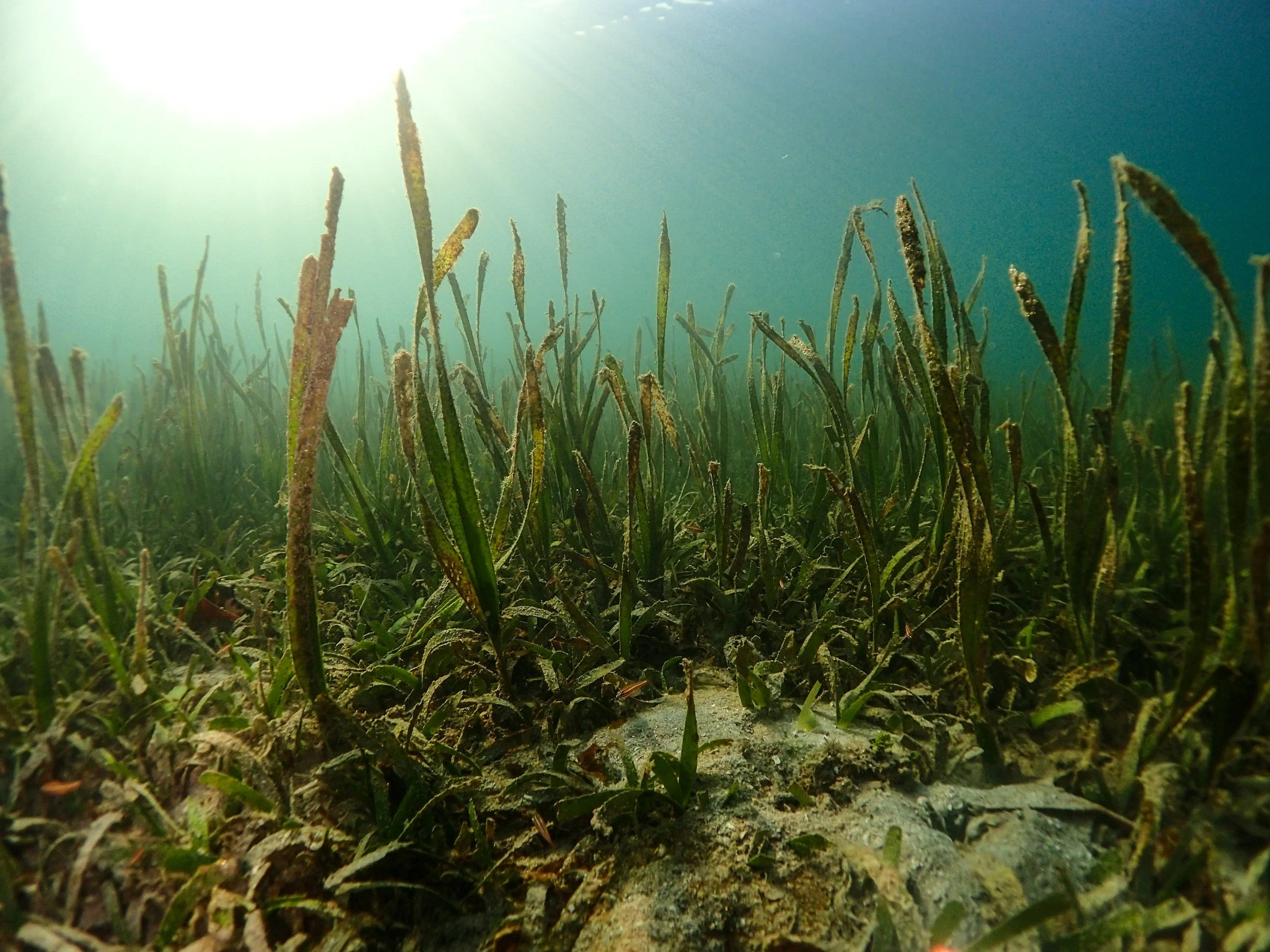
Seagrass, South East Sulawesi, Indonesia. Credit: Benjamin Jones / Unsplash.
And speaking of the ecological wonder of the ocean we should also talk about ‘blue carbon’.
Blue carbon is carbon captured, sequestered, and stored by marine and coastal ecosystems, primarily mangroves, salt marshes, and seagrasses.
For decades the ocean was not considered as a climate solution, but of course it is - and one of the most vital.
Blue carbon ecosystems act as vital carbon sinks, storing carbon in their seabed sediments. They are highly efficient, sequestering 2-4 times more carbon than terrestrial forests, and therefore playing a critical role in mitigating climate change.
Coastal ecosystems (mangroves, seagrass, salt marshes) bury carbon up to 10 times faster per acre than tropical rainforests.
A mangrove forest stores roughly 3–5 times more carbon per hectare than a terrestrial forest.
We worked with The Nature Conservancy to highlight the ocean as a climate solution at the G20 (2024), producing a video that was presented during the climate change keynote - outlining how to strengthen climate adaptation and mitigation through blue carbon.
There is so much more opportunity in this space, but it currently represents only 0.2- 0.35% of total Voluntary Carbon Market issuances (as of 2025).
The ocean is not just taking centre stage as a climate solution and ecological marvel, but as a place of human competition and geopolitical tension.
Marine spaces are increasingly turning into built seascapes, shaped by offshore wind farms, subsea cables, pipelines, aquaculture systems, and digital monitoring devices. Modern society relies on these structures to deliver renewable energy, global connectivity, and environmental information. And they are multiplying rapidly.
There are 3 notable shifts happening in the ocean:
The seabed, once of limited strategic interest, now hosts thousands of kilometres of telecommunications cables - that carry ~95% of international digital and financial traffic.
Arctic sea ice is melting at an accelerating rate due to climate change, with a ~60% decline in volume since 1900. As a result, there is growing interest in resource exploitation in the region, threatening this sensitive ecosystem.
China, USA, Russia, South Korea, and various private firms (e.g. The Metals Company) are leading the exploration for deep sea minerals like cobalt, nickel, and manganese. Deep-sea mining could damage fragile marine habitats and cause massive sediment plumes. And studies indicate that mining operations would result in irreversible biodiversity loss and long-term declines in fish populations.
These shifts are making the ocean a centre for international disputes, from access to natural resources (such as fisheries, energy sources, minerals, or seafaring routes), to military strategies. The ocean is simultaneously a critical frontier for global sustainability and a theatre of intensifying geopolitical rivalry. These two things do not unfold in isolation; they frequently overlap in both (ocean) space and time.
In many regions, the same waters targeted for conservation, climate action, and renewable energy expansion, are also sites of strategic competition over resources, boundaries, and critical infrastructure.
We are at a critical juncture where the ocean badly needs time and space to recover, while meeting the demands of developing nations. We have seen this tension up close through our work with Friends of Ocean Action. The Blue Thread campaign touched on this balancing act and reaffirmed why the ocean matters to all of us.